Categories
Do It Yourself How To

Get Crafty: Create a Stylish DIY Concrete Tray with Ease!

Who said DIY home decor was only for the pros? Today, I’ll show you how to whip up your very own fabulous concrete tray using the reverse casting technique. With straight handles and a smooth surface, this functional piece will add a touch of elegance to your space in no time.

Okay, let’s get started on making your very own concrete tray! But first, grab your favorite beverage and put on some lively music. It’s time to unleash your inner DIY enthusiast!

Materials List for Your DIY Concrete Tray:

The Tray Mold:

  • These 5″ handles (the coolest ones you can find, of course)
  • PVC casing 2 ¼” (this stuff is a dream to work with)
  • 1″ Foam insulation board (or ¾” plywood if you’re feeling adventurous)
  • Dowel ¼” diameter
  • (8) Wood screws 1 ¼” #8 or 10
  • Power drill
  • Phillips screwdriver
  • ¼” Forstner bit (for those perfectly clean dowel holes)
  • Scissors
  • Acetate film sheet (optional, but it helps keep things smooth)
  • Snap-off razor knife
  • Painter’s tape
  • 12″ Ruler
  • Orbital sander
  • Level – 9″
  • Dremel Multi-tool or flush trim saw (for the fancy finish)
  • Chisel

Concrete Materials:

  • Concrete mix
  • Disposable bowl
  • Disposable cup
  • Durable nitrile gloves
  • Safety glasses
  • Safety mask – rated for silica dust

Sealing and Finishing:

  • Orbital sander
  • 180 and 320 grit sandpaper
  • Sealer
  • Foam brush
  • Silicone bumpers

Now, before we dive in, let’s have a quick chat about some material notes:

Tray Thickness and Handles: Initially, I thought we were limited to a ¾” thick tray due to the screw length for the handles. But fear not! You can go all the way up to a luxurious 1″ thick tray. 

It’s sturdier and less likely to crack. Plus, it won’t weigh you down too much. Trust me, even the ¾” version is lighter than it looks!

PVC Casing: Ah, the beauty of PVC casing. It’s like a concrete maker’s secret weapon. It cuts like butter, and concrete won’t stick to it. Working with it is an absolute breeze, making your DIY dreams come true.

Foam Board: If you’re not feeling the foam, you can swap it out for ¾” plywood. Just be cautious about concrete seeping into the plywood around the dowels. However, using plywood allows you to overlap the base with the sides and screw them together, making vibrations a piece of cake.

Forstner Bit: Don’t underestimate the power of the Forstner bit! It ensures clean dowel holes in the foam, preventing any concrete mishaps. We want those dowels to fit like a glove and keep things sturdy.

Acetate: Want that flawless finish? Consider using acetate as a layer between the foam board and concrete. It smooths out any imperfections and gives your tray a polished look.

Dremel Multi-tool or Flush Trim Saw: While a multi-tool makes life easier, a flush trim saw can also do the trick. If you opt for the saw, it’ll require a little more effort. But hey, we’re all about enjoying the process, right?

Timing: Good news! This DIY adventure should take you less than 2 hours of actual working time. But remember, patience is key. Allow 2-4 days for curing and sealing. Rome wasn’t built in a day, and neither is your concrete tray!

Alright, let’s jump into it!

How To Make A DIY Concrete Tray in 12 Steps

Step 1. Cut Your Base Mold Piece

Let’s kick things off by cutting the foam board for the base of your concrete tray. Grab your retractable snap-off blade knife and get ready for some foam-cutting fun! 

Start by scoring the board lightly with a pencil, then go over it with the blade to make the cut. 

Remember to use the factory-cut edges for the best results. Make two cuts, keeping the blades long and holding the knife as perpendicular to the board as possible. Voila! You’ve got your base mold piece, measuring a cool 18×12″.

Step 2. Cut Dowel Pieces

Now it’s time to tackle the dowel pieces. Grab a hand or miter saw and cut the wood dowel into four equal pieces, each measuring 2″ in length. Aim for ninja-level precision here and make sure all four pieces are the same length.

Step 3. Cut The Sides Of The Concrete Tray Mold

Let’s shape things up! Take the PVC molding and cut it into four pieces: two measuring 18″ and two measuring 13 ½”. These will be the sides of your concrete tray mold. Get those PVC cutters ready and let the cutting commence!

Step 4. Cut Acetate To Fit The Base

Time to add a touch of smoothness to your tray. Lay a piece of acetate film on the table and place the foam board on top. Carefully trace around the base and cut the acetate to fit perfectly with a trusty pair of scissors. This will give your tray a flawless finish.

Step 5. Fasten The Sides Of The Concrete Mold Box

Let’s secure those sides, shall we? Wrap the PVC boards around the foam base and use clamps to hold them in place. Attach the short ends to the long ones by drilling two pilot holes and then screwing in each screw. Keep it tight and secure!

Step 6. Cut The Holes For The Handle’s Screws

Now it’s time to plan the perfect spot for your handles. Place the acetate on top of the foam base, ensuring a snug fit without any air bumps underneath. 

To keep things clean and precise, tape the ends with blue tape. Measure 4 ½” from each edge and mark the centre for your screw hole. 

Double-check that everything lines up with the handles. Carefully drill the holes using a low torque setting on your drill. Insert the dowels into the holes, stopping when they are flush with the bottom of the foam base. These exposed dowels will serve as your fill line for the concrete mix.

Step 7. Mix The Concrete And Cast The Tray Mold

It’s time to get your hands dirty with concrete mixing! Aim for a mud pie consistency by combining two batches of concrete mix. Scoop the mix into the Mold until it’s flush with the tops of the dowels. 

Remember not to fully cover the dowels, but a little bit is fine. Give the Mold a good vibration to release any air bubbles and ensure a smooth surface. Slide the Mold back and forth on your work surface to self-level the mix and use an orbital sander without sandpaper to vibrate along each side. 

Take your time with this step, and don’t be afraid to vibe it for about 15 minutes if needed. Before letting it cure, carve out a bit of concrete around each dowel to ensure a flush fit for the screw heads.

Step 8. Demold The Tray

The moment has arrived to unveil your masterpiece! Unscrew the sides of the Mold, but make sure the tray has a frosted appearance and the sides are no longer moist. 

Place a towel on your work surface, flip the Mold over, and gently remove the foam board and acetate. Hang on to that acetate sheet—it might come in handy for the next step.

Step 9. Fasten The Handles To The Concrete Tray

Time to add some handles to your tray! Before you proceed, let the concrete cure for an additional day or two to ensure maximum strength. 

Once you’re ready, use a Dremel multi-tool or a flush-cut trim saw to cut the dowels flush with the tray. Take extra care not to scratch the tray while cutting. If needed, protect the tray with the saved acetate sheet. Pre-drill pilot holes for each handle screw, ensuring they align perfectly. 

Turn the tray on its side and drill the screws until they peek through the wood on the front side. If any screws don’t align with the handles, use a larger drill bit to redrill the pilot hole. Secure those handles in place!

Step 10. Sand The Serving Tray

Time to smooth things out and make your tray even more beautiful! Grab an orbital sander and some sandpaper (180 or 220 grit) to sand the bottom of the tray. Switch to a 320 grit pad and sand the top and sides for a flawless finish. 

Even if you love that glossy sheen, lightly sanding it is important to prevent easy scratching. Don’t forget to go over the back of the tray again with the 320 grit.

Step 11. Seal The Tray

Give your tray the royal treatment by sealing it. Use a foam brush to apply the sealer to the top, then flip the tray over by its handles and seal the sides and back. 

If you have any rough edges, make sure to push the brush into them to get that sealant deep into the holes. Applying a second coat is highly recommended for added protection. Wait approximately 24 hours before applying the second coat, and within 6-8 hours after sealing, your tray will be ready to use!

Step 12. Add Silicone Bumpers To The Bottom Of The Concrete Tray

Last but not least, let’s ensure your tray doesn’t scratch your table. Attach silicone bumpers to the bottom of the tray—one at each corner, about an inch in. These little protectors will keep your table safe while adding a touch of style to your DIY creation.

And there you have it—a fantastic, handmade concrete tray that’s ready to impress! Enjoy serving your favourite goodies in style while basking in the glory of your DIY prowess.

Send us a photo of your new concrete tray, we would love to see it, you can upload your images in the comments section!

Plan your next DIY project with Build it Hermanus and get the job done right, first time. Please follow us on social media to stay up to date with our latest sizzling specials and promotional offers! Visit our Build it Hermanus Facebook page today! Learn more about Build it Hermanus here.

Or log on to our online store and shop from the comfort of your home: www.buildit-store.co.za.

Build it Hermanus offers added value services in respect of hardware retailing; embracing all activity within the building materials industry, focusing specifically on the building of; urban, township, rural housing as well as all home improvements and do it yourself.

Categories
Natural Stone News Tips

The Latest Trends in Kitchen Countertops: A Stylish and Functional Update

The kitchen is the heart of the home, and the countertops are its centerpiece. Not only do kitchen countertops serve as functional work surfaces, but they also play a significant role in defining the style and ambiance of your space. If you’re considering a kitchen renovation or simply looking to update your countertops, it’s essential to stay on top of the latest trends in countertop materials. In this article, we will explore popular materials like granite, quartz, marble, and concrete, discussing their features, durability, design possibilities, and providing insights into choosing the perfect countertop for a modern kitchen.

Granite Countertops

Granite countertops continue to be a sought-after choice for their natural beauty and durability. Each slab of granite is unique, showcasing intricate patterns and colors that add character to your kitchen. Granite is heat and scratch-resistant, making it an excellent choice for a busy kitchen. With proper sealing, granite countertops are also resistant to stains and easy to clean. Whether you prefer classic hues or bold tones, granite offers a wide range of options to suit your style.

Quartz Countertops

Quartz countertops have gained immense popularity in recent years due to their versatility and low maintenance. As an engineered stone, quartz combines natural quartz crystals with resins, resulting in a non-porous surface that is resistant to stains, scratches, and heat. Quartz countertops offer a wide array of colors and patterns, including marble-like veining and solid hues. With its durability and easy upkeep, quartz is an ideal choice for those seeking a stylish and hassle-free countertop option.

Marble Countertops

Marble countertops exude elegance and timeless beauty. Known for their unique veining patterns, marble adds a luxurious touch to any kitchen. While marble is more porous than granite or quartz, it can be sealed to protect against stains and etching. It’s important to note that marble requires regular maintenance and care to preserve its pristine appearance. If you’re willing to put in the effort, marble countertops can elevate your kitchen to a whole new level of sophistication.

Concrete Countertops

Concrete countertops offer a sleek and contemporary look, perfect for modern kitchen designs. Concrete allows for endless design possibilities, including custom shapes, textures, and integrations like sinks and drainage boards. With the right sealing, concrete countertops are highly resistant to heat, scratches, and stains. They can be pigmented to match any color scheme and can be polished for a smooth finish or left with a more industrial look. Concrete countertops are a unique and artistic choice for those looking to make a statement in their kitchen.

When choosing the perfect countertop for your modern kitchen, consider factors such as your lifestyle, desired aesthetic, and maintenance requirements.

At Build it Hermanus, we offer a wide selection of high-quality building materials to suit your needs and preferences. Our knowledgeable team is here to guide you in making the right choice for your kitchen renovation project, visit us in-store today for expert advice.

Whether you prefer the natural elegance of granite, the versatility of quartz, the timeless beauty of marble, or the contemporary appeal of concrete, we have the perfect countertop solution for you.

Categories
Building Materials Tapes

The Best Tapes For Workshops and Homes

When it comes to workshops and homes, having the right tape can make all the difference. Whether you’re working on a DIY project, fixing something around the house, or organizing your workspace, having reliable tape on hand can save you time and frustration.

Some of the best tapes for workshops and homes include duct tape, insulation tape, double-sided tape, masking tape, and box sealing tape. Each of these tapes has its unique features and benefits, making them suitable for various applications. By having a selection of these tapes on hand, you can ensure that you’re always prepared for whatever project or task comes your way.

Insulation Tape

Insulation tape is a multi-purpose adhesive tape primarily used for electrical insulation applications. The tape is made of durable materials like PVC or rubber and is engineered to offer protection against electrical currents and heat. It is available in different colors and sizes, making it suitable for a wide range of applications.

The key advantage of insulation tape is its ability to provide complete electrical insulation, safeguarding against accidents and damage caused by electrical currents. It is also effective in preventing heat transfer, making it perfect for insulating heat sources and pipes. With its robust adhesive properties, insulation tape sticks well to various surfaces and can withstand harsh weather conditions and high temperatures.

Insulation tape features a strong adhesive that secures it firmly in place, even in tough environments. Its flexibility makes it easy to wrap around cables and wires, offering complete insulation coverage. Moreover, it is easy to cut, allowing for customization to any length required.

Some of the salient features of insulation tape include its high-temperature resistance, making it perfect for high-temperature environments. It is also moisture-resistant, ensuring that it stays effective in damp conditions, easy to apply and can be used on a range of surfaces, including metal, plastic, and rubber.

Whether you’re a professional electrician or a DIY enthusiast, insulation tape is an indispensable tool for all electrical insulation needs.

Duct Tape

Duct tape is a durable and versatile adhesive tape that is a must-have for any workshop or home repair kit. It is made of a strong and flexible fabric material with a rubber-based adhesive backing that can be used for a range of applications. Duct tape comes in various colors and sizes, making it easy to use for a wide range of purposes.

One of the primary benefits of duct tape is its versatility. It can be used for sealing and repairing air ducts, pipes, and electrical cords. Its strong adhesive backing ensures that it sticks well to a variety of surfaces and is highly durable, making it ideal for heavy-duty applications.  Waterproof, it can withstand harsh weather conditions, making it ideal for outdoor applications. Use for patching holes in tents, tarps, and other outdoor gear, duct tape is a valuable addition to any camping or outdoor adventure kit.

Moreover, it can be easily torn by hand, making it convenient to use in emergency situations. Whether you’re a DIY enthusiast or a professional, duct tape is a must-have for all your repair needs.

Conspicuity Tape

Conspicuity tape, also known as reflective tape, is a durable and highly visible adhesive tape that is designed to improve safety in low-light or dark conditions. 

Made of retro-reflective materials, it reflects light back to its source, making it visible even from long distances. While it’s commonly used in the transportation industry, such as trucks and trailers, it can also be used in a variety of other applications. Its durability and resistance to weather and other environmental factors also make it ideal for use in harsh outdoor environments.

It’s available in different colors such as red, white, and yellow, allowing for customization to specific applications. Additionally, it has a strong adhesive, which ensures it sticks well to a variety of surfaces, including metal, plastic, and rubber.

Whether used in transportation, marking obstacles, or highlighting emergency exits, conspicuity tape is an effective and reliable safety solution.

Double-sided tape

Double-sided tape is a versatile and convenient adhesive tape that features adhesive on both sides, making it an ideal solution for bonding two surfaces together.

It comes in various sizes and strengths, making it suitable for a range of applications. One of the primary benefits of double-sided tape is its versatility. 

It can be used for various household and office needs, such as mounting pictures and posters, creating crafts and scrapbooks, and attaching fabric. The strong adhesive backing ensures a secure hold on various surfaces, including difficult ones, and it is easy to use without the need for scissors or dispensers.

Available in various strengths, including heavy-duty options for more demanding applications. It can also be easily removed without damaging surfaces, making it a convenient and reliable solution for your bonding needs.

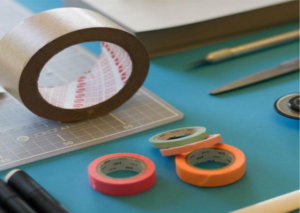
Masking Tape

Masking tape is a pressure-sensitive tape that provides temporary protection without leaving residue or damaging surfaces. It is commonly used in painting projects for creating sharp lines and protecting areas that should not be painted.

One of the significant advantages of masking tape is its ability to provide temporary protection while being easily removed. It is versatile and can be used in various applications such as labeling, bundling, and packaging.

Build it Hermanus Building Materials Masking Tape

The tape is easy to tear without needing scissors and has a low-adhesive strength that allows it to be removed without leaving any residue and without causing any damage to surfaces. Masking tape is a valuable tool for anyone looking to protect surfaces temporarily or create straight lines in painting projects.

Also, it is available in different widths, which enhances its versatility for various applications in the workshop and home environments.

Sealing Tape

Sealing tape, also known as packaging tape or box sealing tape, is a versatile pressure-sensitive tape that is specifically designed to securely seal boxes and packages. Its durable and tear-resistant properties make it ideal for shipping and packaging applications, available in various colors and strengths, and is typically made of polypropylene or PVC.

Easy to use, with a convenient dispenser that allows for easy application, it is available in various colors, making it easy to identify packages or add branding to boxes.

Whether you’re sending packages across the country or just packing up items for storage, sealing tape is an ideal solution for all your packaging needs, both in the workshop and at home.

All the above products are available from your local Build it Hermanus, for building materials, do-it-yourself home improvement tools, and expert advice.

Follow us on social media, to stay up to date with our latest sizzling specials and promotional offers!

Build it Hermanus offers added value services in respect of hardware retailing; embracing all activity within the building materials industry, focusing specifically on the building of; urban, township, rural housing as well as all home improvements and do it yourself.
Categories
Do It Yourself How To

How To Build a Patio Dinner Table Step by Step

Building a charming outdoor table can be a great DIY project for those who enjoy woodworking, as it not only allows you to showcase your creativity and craftsmanship, but also provides a functional and aesthetically pleasing addition to your backyard or patio space, where you can host intimate gatherings, share meals with family and friends, or simply relax and enjoy the outdoors.

Building an outdoor patio table requires careful consideration of the wood’s durability and resistance to weathering, it’s important to choose high-quality wood, treat it properly with sealant or stain, and use strong joints and hardware to assemble the table.

Today we will be Building a 2-meter wide, 8-meter long, and 2-meter-high patio table made of Meranti hardwood.To begin, you’ll need to gather all the necessary tools and materials, by following these steps, you can create a beautiful and functional table that will add rustic charm to the outdoor area of your home.

Materials:

  • 16 Meranti hardwood boards (2m x 0.2m x 0.05m)
  • 8 Meranti hardwood boards (8m x 0.2m x 0.05m)
  • 4 wooden legs (2m x 0.1m x 0.1m)
  • Stainless steel screws
  • Wood glue
  • Sandpaper
  • Outdoor varnish or sealant

Tools:

  • Measuring Tape
  • Circular saw or handsaw
  • Drill
  • Screwdriver
  • Clamps
  • Sanding block or electric sander
  • Paintbrush (if using varnish or sealant)

Step 1: Cut the Boards

Using a measuring tape, mark and cut the 16 2-meter-long Meranti boards into 4 equal lengths of 0.5 meters each. These will be used as the table’s tabletop planks.

Then, cut the eight 8-meter-long Meranti boards in half to make sixteen 4-meter-long pieces. These will be used to create the table’s frame. Lastly, cut the four wooden legs to 2 meters in length.

Step 2: Create the Tabletop

Lay the four tabletop planks side by side on a flat surface. Use wood glue to attach them together. Clamp the planks tightly and leave to dry for several hours.

Step 3: Create the Table Frame

Place the sixteen 4-meter-long pieces of Meranti in a rectangular shape. Attach the corners with screws and wood glue.

To make the joints stronger, drill pilot holes before attaching the screws. Use the measuring tape to ensure that the rectangle’s dimensions are 2 meters wide by 8 meters long.

Step 4: Attach the Tabletop to the Frame

Place the tabletop on top of the table frame. Use stainless steel screws and wood glue to attach the tabletop to the frame. Again, drill pilot holes to make the joints stronger.

Step 5: Attach the Legs

Flip the table over and attach the legs to the corners of the frame. Use stainless steel screws and wood glue to secure them in place. Again, drill pilot holes to make the joints stronger.

Step 6: Sand and Finish the Table

Use sandpaper or an electric sander to smooth out any rough edges and surfaces. Apply an outdoor varnish or sealant to protect the table from the elements. Follow the manufacturer’s instructions for application and drying times.

Your 2-meter wide, 8-meter long, and 2-meter high Meranti hardwood patio dinner table is now complete and ready to use with friends and family😉

For those who appreciate the beauty and value of handmade furniture, building a patio table from scratch can be a fulfilling and rewarding endeavour. The satisfaction of seeing your creation come to life and enhance your outdoor space is worth the effort and dedication put into every stage of the building process.

All the tools and materials used in this article are available instore from Build it Hermanus, for building materials, do-it-yourself home improvement tools, and expert advice.

Please send us a photo of your completed creation, we would love to see it, you can upload your images in the comments section!

Follow us on social media, to stay up to date with our latest sizzling specials and promotional offers!

Build it Gansbaai/Hermanus offers added value services in respect of hardware retailing; embracing all activity within the building materials industry, focusing specifically on the building of; urban, township, rural housing as well as all home improvements and do it yourself.

Categories
How To

How to Paint Wood to Achieve Smooth Results

This is a great guide for homeowners who are not professional painters, on how to get a super smooth coat of paint when you need it, cabinets, woodwork, trim, these all need smooth paint without unsightly brush marks.

Painting wood seems like such a basic project that people often attempt short cuts or rush the project and end up with poor results. 

Mastering the techniques of painting wood surfaces is not difficult, follow these tips and you will end up with beautiful results, let’s begin with what you will need.

Equipment / Tools

  • Plastic Drop Sheeting
  • Rubber Gloves
  • Bucket
  • Clean Cloths
  • Random Orbital Sander or Sandpaper
  • Vacuum
  • 70mm Paintbrush
  • Roller With a High-density Foam
  • Paint Tray

Materials

  • TSP (tri-sodium phosphate)
  • 180-grit and 220-grit Sandpaper
  • Tack Cloth
  • Primer
  • Enamel paint or an Interior Acrylic-latex Paint
  • Paint additive such as Penetrol or Floetrol (optional)

Cover Your Work Surface and Clean the Wood

Drape plastic sheeting over the floor or other work surface to protect it from paint spills. The plastic keeps the paint from soaking through to the floor and helps to contain paint spills.

Mix a solution of TSP with warm water according to the manufacturer’s recommendations, wet a cloth in the water and firmly squeeze it dry, then wipe down the wood to remove all the dirt and oils.

Let the wood dry completely, now check for large nicks, gouges, and scratches, if necessary, fill these with a wood filler.

Note: TSP is a strong cleaner and degreaser that is used for cleaning surfaces in preparation for painting, but you could substitute it for a similar product.

Prep the Wood and Sand Your Primer

A good paint job is in the preparation before you even touch a paint brush. Without a smooth base, you can’t get a smooth finish.

Sand the bare wood to 120-grit, this will give the primer a good hold and create the right base to start with. Paint your primer onto the wood, if the primer looks transparent or streaky, prime a second time.

Sand the primer down with 220 grit paper once the primer has dried enough, for a super smooth feel before your final paint. Between each sanding we recommend that you use a vacuum cleaner to remove the majority of the dust, then clean off the remaining dust with your tack cloth. A tack cloth or tack rag is a gauze-like, lint-free material, impregnated with a waxy  substance used to remove dust and dirt from wood.

Note: Too much pressure on the tack cloth will be counter-productive, lightly wipe it across the surface, as not to press the tack cloth’s embedded wax onto the surface.

You can Use Additives

There are additives that you can use, like Penetrol and Floetrol for your paint that slow down the drying process and makes the paint less sticky.

Thinner paint lays down better and helps hide brush marks.

Penterol Oil-Based Coating Additive is a versatile low-odour additive to improve penetration, adhesion and flow of oil-based paints, stains, varnishes, and primers. It is a versatile blend of natural oils with a penetration power 3 times more than water and has a powerful bonding ability.

Floetrol is a latex paint additive that makes interior and exterior latex or acrylic paint flow and level like oil-based paints, while compensating for the adverse effects that weather and surface conditions have on paints and primers.

Buy The Right Paint

Do not skimp on buying a good quality paint, for woodwork and cabinets, you should consider Enamel paint, which dries harder than regular paint.

Put it On, Leave it Alone

Roll the paint on with the foam roller, smooth it out and leave it alone. The quicker you can get the surface covered, the more time the paint has to smooth out as it dries.

Note: Unlike the nap-style roller, the foam roller soaks up paint like a sponge, preventing drips and splatters. High-density foam roller covers work better with thinner latex paint than with oil-based paints.

You can use the paint brush to fill in the creases. Keep a wet edge at all times to prevent lap marks, do not add a second coat of paint during this step, as this can cause the paint to tear.

If you find any defects while the paint is drying, you will have to fix it later with the next coat.

For the best results, if possible, let the piece dry overnight before using it, paint becomes more durable after it fully cures. Remember that some of these are techniques that take a little practice to get just right, so don’t be frustrated if it takes a little time to get perfect, as in everything else, practice makes perfect.

For your convenience all the products and materials are available from the Build it Hermanus store, please feel free to ask any of our experienced salespeople for assistance or advice when purchasing a product, we are here to make your shopping experience as memorable as possible.

Build it Hermanus offers local delivery, supplying the greater Overberg area with building materials, do-it-yourself home improvement tools, and expert advice.

Please follow us on social media to stay up to date with our latest sizzling specials and promotional offers! Or log on to our online store and shop from the comfort of your home: www.buildit-store.co.za

Build it Hermanus offers added value services in respect of hardware retailing; embracing all activity within the building materials industry, focusing specifically on the building of; urban, township, rural housing as well as all home improvements and do it yourself.

Categories
Do It Yourself

How to Make a Butcher Block Cutting Board

Are your countertops showing undue wear and tear? Do your kitchen knives dull faster than you can sharpen them? Protect your utensils and kitchen surfaces with an attractive butcher block cutting board you can simply make yourself.

What you will need:

Tools and Materials:

  • Table Saw
  • Belt Sander
  • Tape Measure
  • Clamps
  • Router
  • Goggles
  • Dust Mask
  • Glue (GlueDevil Wood Glue or Alcolin Fast Set Wood Glue)
  • Mineral Oil (Food Grade)

Build it Hermanus stocks everything you will need for this project, you can shop in store or order all these items online, from the comfort of your own home and delivered straight to your front door. 

Check it out! www.buildit-store.co.za

Selecting The Right Timber:

Selecting the right timber for a butcher block cutting board is very important. The timber should be dense enough to withstand the constant pounding that a cutting board must endure. The material should not transfer any flavour to the foods that are processed on it. Generally, hardwoods such as Meranti, Oak, Maple, Cherry etc. are ideal. 

All African hardwoods can be used. You may want to use two different species of timber with contrasting colours to make your cutting block. Most cutting boards are made of narrow, deep strips laminated or glued together. Today we will focus on the glueing method.

Making The Cutting Board:

Size the cutting board according to your needs and specifications. The length and width may be whatever you choose, but the thickness should be at a minimum of 25mm at least, to give the board substance.

Build it Hermanus DIY

You can prepare and assemble the timber using the following steps:

Step 1:

Cut the timber half an inch longer than the desired length of the cutting board.

Step 2:

Set the fence on the table saw and rip cut the stock 1,6mm wider than the cutting board depth. Depending on the thickness of the cutting board, you may be able to get more than one piece from each board. 

For example, if the cutting board is 38mm thick and you are using 25 x 100 (1 x 4’s), you can cut two pieces from a single board.

Step 3:

Lay the pieces out on a flat surface, glue and clamp them together. 

What Glue Should You Use?

Build it Hermanus would recommend any of the following two glues for your cutting board, as they are both non-toxic and safe to use.

GlueDevil Wood Glue is a versatile fast-drying, multi-purpose wood adhesive. It is a polyvinyl acetate (PVA) which dries by evaporation of water, without heat to form a tough, sturdy, non-visible bond as it dries clear. GlueDevil Wood Glue is suitable for both hardwoods (e.g. imbula, oak) and softwoods (e.g. pine) as well as processed boards (e.g. hardboard, chipboard).

Alcolin Fast Set Wood Glue is a high quality, fast setting polyvinyl acetate-based wood adhesive. It dries clear to form a tough, non-visible glue-line which is stronger than wood. Excellent adhesion to medium woods, softwoods, processed board, leather, cloth, felt, paper, cardboard, cork, and most other porous materials.

Tip: Use the glue sparingly and remove any excess glue as soon as it squeezes out.

Step 4:

Allow the glue to set and cure, as per the instructions on the packaging.

Step 5:

Remove the clamps, use a table saw to cut the cutting board to the proper length.

Step 6:

Use the belt sander to smooth and level the cutting board.

Step 7:

Use a router or sander to round the edges of the board.

Step 8:

Apply a coat of mineral oil to the entire cutting board to keep the board from drying out and cracking, then let it sit overnight.

Step 9: 

Wipe away any remaining oil and your cutting board is now ready to use.

Caring For Your Cutting Board:

Thoroughly clean the cutting board after each use with hot soapy water and a mixture of two tablespoons of Jik to one litre of water to kill any bacteria on the board.

Always dry the board thoroughly before you store it, and apply mineral oil monthly, to extend the life of your cutting board.

Mineral oil (liquid paraffin) is a non-toxic, non-drying product derived from petroleum that is colourless, odourless, and flavourless. Its properties prevent water absorption, which makes food-grade mineral oil a popular choice for wooden kitchen items such as wooden spoons, bowls, and, of course, cutting boards.

Regular application of mineral oil will prevent cutting boards from becoming dry and brittle, which can cause a cracked board. A board that is treated with oil also prevents liquids from penetrating the board, which is often the source of germs and bacteria.

Oiling a cutting board is quite easy, pour a few tablespoons of mineral oil (rated for food) on top of the clean dry cutting board surface, then rub the oil in using a soft cloth.Be sure to cover the entire surface including the end grains, then wipe away any excess oil with a paper towel.Let your cutting board air-dry overnight and it will be ready to store.

Send us a photo of your new wooden cutting board, we would love to see it, you can upload your images in the comments section!

Plan your next DIY project with Build it Hermanus and get the job done right, first time. Please follow us on social media to stay up to date with our latest sizzling specials and promotional offers!

Or log on to our online store and shop from the comfort of your home: www.buildit-store.co.za

Build it Hermanus offers added value services in respect of hardware retailing; embracing all activity within the building materials industry, focusing specifically on the building of; urban, township, rural housing as well as all home improvements and do it yourself.

Categories
Building Materials Natural Stone

The Beauty and Luxury of Natural Stone: Marble and Granite Tiles

Marble Tiles are truly one of the most elegant stone materials that you can have in your home.

Marble Tiles

Builders have been featuring marble tiles as a practical yet luxurious material for centuries, from gorgeous marble tiled bathrooms, kitchen floors, and marble fireplaces in both domestic and commercial design installations.

Marble Tiles come in a wide range of colours, making it an ideal choice for accentuating any type of décor, due to Marble Tiles being, hypoallergenic, allergen, water and bacterial resistant, they are also a popular choice.

In addition to the various hues available, the differences in vein patterns and grain distinguishes various types of Marble Tiles from one another and will always be unique, as not one Marble slab is the same as another.

Marble Tiles are durable, resilient, and elegantly beautiful, the choices are endless, allowing you to create distinctive designs with any application of this material.

As a naturally decorative and aesthetic material, marble instantly adds an artistic sophistication to a home or commercial property, providing that timeless, visual impact you desire.

Marble Tile Finishes available are:

  • Brushed Marble Tiles – Matt Finish
  • Acid Washed Marble Tiles – Rough Finish
  • Polished Marble Tiles – A polished finish is the highest level of shine that can be achieved naturally.
  • Honed Marble Tiles – A honed finish is less polished and therefore encompasses many levels of natural finish.
Build it Hermanus The Beauty and Luxury of Natural Stone

Granite Tiles

Granite Tiles are one of the most durable natural stones tiles because of its formation process. It takes thousands of years of extreme pressure for granite to reach its final state, making the stone incredibly dense.

The strength of Granite Tiles is widely considered to rival that of diamonds, which are used to cut the granite stone blocks into slabs at quarries, before they are cut into Tiles. Besides its natural beauty, Granite Tiles have become increasingly popular to homeowners, as Granite tile flooring is hard, durable, and long lasting. 

Easy to maintain and are available in a wide range of colours and finishes, they are extremely versatile adding an allure of luxury to all projects. 

As Marble, Granite Tiles are also popular due to being hypoallergenic, allergen and bacterial resistant.Granite Tiles are popular for flooring, wall features and many other design elements, they can be used both indoors and outdoors to produce impressions of elegance and simplicity.

Granite Tile Finishes available are:

Leathered Granite Tiles: Less glossy and “non-slip”

Flamed Granite Tiles: This finish is used primarily for exterior applications where slip-resistance is extremely important.

Honed Granite Tiles: A honed finish is less polished and therefore encompasses many levels of natural finish.

Polished Granite Tiles: A polished finish is the highest level of shine that can be achieved naturally.Whatever look and feel you are creating, you can never go wrong with either Marble or Granite Tiles.

Please feel free to ask any of our experienced salespeople for assistance or advise when purchasing a product, we are here to make your shopping experience as stress free as possible.

Please follow us on social media to stay up to date with our latest sizzling specials and promotional offers! Or, log on to our online store and shop from the comfort of your home: www.buildit-store.co.za

Build it Hermanus offers added value services in respect of hardware retailing; embracing all activity within the building materials industry, focusing specifically on the building of; urban, township, rural housing as well as all home improvements and do it yourself.
Build it is a division of the SPAR Group Limited South Africa. A voluntary trading group of individually owned retail stores with more than 10 000 employees across the group, we currently have stores in South Africa, Namibia, Swaziland, Lesotho and Mozambique with plans to expand into Botswana and Zambia in the near future. We view ourselves not only as a supplier of materials, but as a partner to our valued customers in accomplishing their building or renovating projects.


Categories
Do It Yourself

DIY Tree house Ideas and Building Tips

Have you ever thought about building your own tree-house?  This is a fun DIY project that the whole family can  participate in because there is no better feeling than making or building something special with your children. 

Today, Build it Hermanus is going to share some advice and tips for building your little house in the trees.

Is a Tree house legal?

Strictly speaking, in terms of the National Building Regulations, it depends on its size. A child’s playhouse that is no more than five square meters in size is categorized as minor building work, which means that you do not need to submit plans for a tree-house that is smaller than that. Great news! Now that we know we will not be getting into any trouble, let’s get started!

How to choose a tree to build your Treehouse in?

To build a standard 3×3 meter tree-house, choose a healthy, deciduous (hardwood) tree with a trunk of at least 30 cm diameter.  

You can calculate the diameter of your tree by measuring all around the trunk with a tape measure, then divide the measured result by pi (3.142) to give you the diameter.

Deciduous trees have a denser wood that can support greater loads. The best trees include Cedar, Maple, Oak, Fir, Beech, Ash, and Hemlock.

If you are considering building your tree-house in a softwood tree like a Pine Tree or the Natal Mahogany, you will need a thicker tree trunk to support the load. Building your tree-house too high can be dangerous for children so aim to make your platform about 2.5 meters high.  

Building a safety rail around the platform will help to prevent children from falling off. The safety rail around the platform should be about 90 cm high, with a spacing between the vertical posts of not more than 15 cm.

Keep Stability in Mind

While it is very exciting and there are so many fantastic tree-house designs (add link at the bottom) you could get off the internet, the final design will depend on the tree you have chosen.

Building a house in a tree will require careful planning, so here are some structural matters to keep in mind while designing your tree-house.

  • Build the platform close to the trunk as possible, and add diagonal bracing for extra strength, this will support any uneven loads.
  • For heavy tree houses, consider building your tree-house lower to the ground as strong winds will put pressure on trees roots.
  • A tree-house built low in the tree will experience lower wind speeds and will produce lower forces on the roots because the leverage effect of the trunk will be less.
  • Try and choose a tree with V-shaped branches as this provides extra strength and support, this means you will have 4 fixing points instead of only 2, to secure your tree-house.

Do not Restrict the Trees Growth

To accommodate the movement and growth of the tree, allow enough space (about 5cm) around the branches and trunk.  You can add spacers between the beams and the tree to allow movement.

Trees grow larger by expanding their diameter and growing new branch tips, not by stretching the entire tree. 

New layers of wood are added during the spring and summer which increase the diameter of trunks and branches. The only part of the tree to get any higher are new shoots, extending from the ends of branches. 

Once one season has passed, these shoots will not grow further but will expand as branches and the trunk do.

Use the Right Fasteners

You want your tree-house to last, so it is important to make sure that your tree stays healthy.  The use of nails, screws, or bolts can cause health problems for a tree if not fitted correctly.

Any damage to the bark of the tree, whether by nails, screws, or bolts, is a potential entry point for infections and bacteria, so it makes sense to keep the overall number to a minimum.

The general recommendation for fixing supports is to use a single, large bolt fitted into a cleanly drilled pilot hole. Nails and screws are not strong enough for major supports without causing tree damage. 

Allow for flexible supports, especially if you use more than one tree so that trees can move in the wind. Special floating brackets allow the tree to sway.

You can order floating brackets (add link to store) and treehouse fasteners (add link to store), they allow the tree more room to grow, can support heavy loads up to 12cm’s from the tree and they hold more weight than normal bolts.

Building your Tree-house

You won’t have to break the bank for this project.  It is a great idea to build with exterior-grade plywood (which is weatherproof),  and the floor can be constructed from solid shutter board.

Make sure that your floor is level and the center load is spread evenly, then building the rest of the structure becomes easier.

If you prefer, you could even fabricate the main sections of your tree-house on the ground and then hoist them into position.

Check out these incredible treehouse building plans to get started.

Now the possibilities become endless, you can add a trap door, shutters for windows, and timber steps that lead from the ground to the deck.  

Use your imagination, this is the fun part😊

Please send us a photo of your new Tree House, we would love to see it, you can upload your images in the comments section!

Plan your next DIY project with Build it Hermanus and get the job done right, first time.

Please follow us on social media to stay up to date with our latest sizzling specials and promotional offers! Or, log on to our online store and shop from the comfort of your home: www.buildit-store.co.za

Build it Hermanus offers local delivery, supplying the greater Overberg area with building materials, do-it-yourself home improvement tools, and expert advice.

Build it Hermanus offers added value services in respect of hardware retailing; embracing all activity within the building materials industry, focusing specifically on the building of; urban, township, rural housing as well as all home improvements and do it yourself.

 

Build it is a division of the SPAR Group Limited South Africa. A voluntary trading group of individually owned retail stores with more than 10 000 employees across the group, we currently have stores in South Africa, Namibia, Swaziland, Lesotho and Mozambique with plans to expand into Botswana and Zambia in the near future. We view ourselves not only as a supplier of materials, but as a partner to our valued customers in accomplishing their building or renovating projects.

Categories
Do It Yourself

Organizing Your Garage

When you think about a garage, the mind conjures up a house to store your vehicle, however, the modern garage is far more multifaceted, serving as storage, home gym, office, workshop, or flatlet.

Whatever your garage is used for, if you want to maximise this useful space to it’s full potential, keeping it organised is very important. We have put together some useful tips in keeping your garage organised, as a lack of space will restrict your movement and from using your garage properly.

What will you be using your garage for?

You need to have a purpose in mind before you can effectively start organising your garage. This will ensure that you fit the right shelves, cupboards, or facilities to make the most out of the space you have available, beforehand.

Storage

When organising your garage, storage is essential part of keeping this space uncluttered so that you can still fit your vehicle in and move around without bumping into things.

Vertical wall-mounted shelves will help by keeping everything visible so you can find items quickly, or for items you would prefer to keep out of sight, drawers, cabinets, and cupboards are an affordable choice, for a more minimalistic approach.

You can be really creative when it comes to storing things like, loose screws, nuts, bolts and other smaller items in old coffee cans or jars.

A lack of floor space impacts movement, so when it comes to storing your items, hooks and brackets are an excellent choice. They can be attached to walls or hung from ceilings to free up work surfaces and floor space, for items such as gardening equipment or bicycles.

Zone It!

By zoning different areas for certain purposes, you can create areas like home maintenance where you store items like, power tools and paint or a gardening section for your lawn mower, and other gardening paraphernalia.

By zoning your garage, you keep it tidy, you know precisely where to find specific items when you need them, and everything is grouped together.

At Build it Hermanus, we have a vast array of storage options to choose from, please get in touch and we’d be happy to help with advice, on which products would suit you.

Please send us a photo of your newly organised garage, we would love to see it, you can upload your images in the comments section!

Plan your next DIY project with Build it Hermanus and get the job done right, first time.

Please follow us on social media to stay up to date with our latest sizzling specials and promotional offers!

Or, log on to our online store and shop from the comfort of your home: www.buildit-store.co.za

Build it Hermanus offers added value services in respect of hardware retailing; embracing all activity within the building materials industry, focusing specifically on the building of; urban, township, rural housing as well as all home improvements and do it yourself.


Categories
Do It Yourself

How To Fit Locking Laminate Flooring

Build it Hermanus everything to make home building simple, providing building materials to build your home from the foundations to the finishes and fittings!Summer is upon us; the year is winding down and Michael Bublé is defrosting as we speak. It’s almost time to get your DYI on.

Nothing transforms a home like a new floor, from drab to fab, so we are going to give you step by step instructions on, how to fit locking laminate flooring. Laminate flooring is a great flooring option because you can have the beautiful look of a hardwood floor without all the maintenance.

Installing a laminate floor may see like a daunting task, but with some basic knowledge and a small array of tools, the average homeowner can install a floor in a relatively short amount of time.

What you will need:

Tools and Materials:

  1. Scissors or a Knife
  2. Set Square
  3. Pencil
  4. Ruler
  5. Dust Mask
  6. Hacksaw or Jigsaw (with laminate blade)
  7. Trim Cutters
  8. Fitting Wedges or Expansion Spacers
  9. Underlay to cover the size of your floor
  10. Laminate flooring of your choice
  11. Laminate flooring trim

Build it Hermanus stocks everything you will need for this project, you can order all these items online, from the comfort of your own home and delivered straight to your front door.

Check it out! www.buildit-store.co.za

Locking Laminate Flooring

Locking flooring boards have long and short tongues on the sides and the ends that lock together. It is easy to unlock the floor again if you want to move it.

Condition the boards before fitting, lay them horizontally in their packing in the room where they are to be used for at least 48 Hours.

Let’s Get Started!

Laminate flooring expands and contracts naturally, so you need to leave a gap of 10mm between the boards and the skirting board when fitting, using fitting wedges or expansion spacers.

Lay the first board length ways in a left-hand corner over your underlay, the end with the short tongue against the wall.

Fit wedges at intervals between the board and the skirting following the manufacturer’s instructions, and check that the board is square with the wall.

Viola! Look at you, all fancy and stuff, that was the hard part! 😉

Place the short end of the next board at an angle against the previous board and fold down, making sure the board is on the locking strip in the previous row.

Angle boards by 30 Degrees and push against the row in front, when boards are tightly together push them down.

For the last row, place a board at a time over the previous row. Place a third board on top with the tongue touching the skirting and use the edge to mark the cutting line on the board beneath.

Cut the board and ease into position. See, Easy Peasy! Now for the trim…

Build it Hermanus

Floor Trim

Once the flooring is laid, you can remove the fitting wedges and cover the gap around the edge of the room with laminate flooring trim, chosen to match the colour of the floor. The trim should be fixed with adhesive to the skirting, not the floor!

Measure and cut lengths of laminate floor trim, apply trim adhesive to the back of the length of flooring trim so that it will stick to the skirting board and not the floor.

Press the trim into place and if necessary secure them with some heavy weights while the adhesive dries.

All done!

Please send us a photo of your new floor, we would love to see it, you can upload your images in the comments section!

Plan your next DIY project with Build it Hermanus and get the job done right, first time.

Please follow us on social media to stay up to date with our latest sizzling specials and promotional offers!

Or, log on to our online store and shop from the comfort of your home: www.buildit-store.co.za

Build it Hermanus offers local delivery, supplying the greater Overberg area with building materials, do-it-yourself home improvement tools, and expert advice.

Build it Hermanus offers added value services in respect of hardware retailing; embracing all activity within the building materials industry, focusing specifically on the building of; urban, township, rural housing as well as all home improvements and do it yourself.