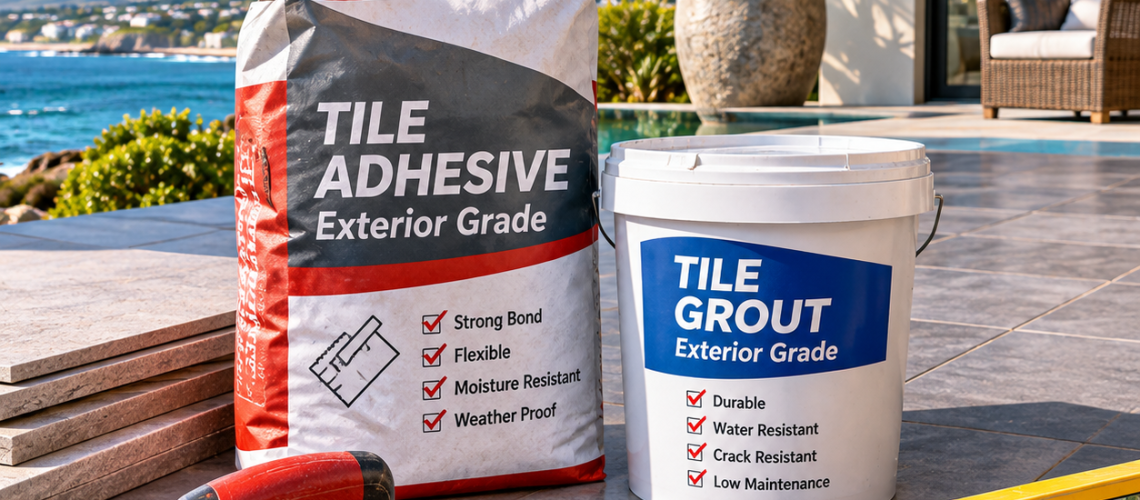
When tiling an outdoor area, choosing the right products is just as important as selecting the tiles themselves. Suitable tile adhesive building supplies help create a stable bond, while the correct grout helps protect joints against moisture, temperature changes and everyday wear. For homes in coastal areas such as Hermanus, these considerations become even more important.
Exterior tiled areas are exposed to sunlight, wind, rain, moisture and temperature fluctuations.
In addition, salt-laden coastal air can contribute to deterioration of unsuitable materials over time.
Therefore, homeowners should choose tile adhesive and grout products specifically suited to outdoor conditions rather than simply using products intended for interior applications.
Whether you are renovating a patio, pool surround, outdoor entertainment area, balcony or exterior walkway, understanding the differences between adhesives and grouts can help you choose the appropriate tile adhesive building supplies for your project.
Why Exterior Tiling Requires the Right Products
Interior and exterior tiled surfaces do not experience the same conditions.
Inside the home, tiles are generally protected from direct weather exposure. Outdoors, however, the installation needs to cope with:
- Direct sunlight and UV exposure
- Rain and moisture
- Wind-driven water
- Temperature fluctuations
- Thermal expansion and contraction
- Coastal humidity
- Salt-laden air
- Regular foot traffic
- Dirt and outdoor contaminants
Consequently, an adhesive that works well for an indoor bathroom may not necessarily be appropriate for an exposed patio.
The same applies to grout.
Exterior grout needs to withstand moisture and temperature changes while maintaining a strong, durable joint between tiles.
Product Differences: Tile Adhesive vs Grout
Tile adhesive and grout perform different jobs, so they should not be treated as interchangeable products.
What Does Tile Adhesive Do?
Tile adhesive creates the bond between the tile and the prepared surface beneath it.
Depending on the product and application, tile adhesive can be used on surfaces such as concrete, screeds, cement-based substrates and other suitable backgrounds.
For exterior projects, look for an adhesive that is designed or rated for outdoor use and is appropriate for the type of tile and substrate being installed.
Important characteristics may include:
- Strong adhesion
- Flexibility
- Resistance to moisture
- Suitability for temperature changes
- Compatibility with the selected tile
- Compatibility with the substrate
- Appropriate setting characteristics
Flexibility is particularly important outdoors because different materials can expand and contract as temperatures change.
What Does Grout Do?
Grout fills the joints between tiles after the adhesive has cured sufficiently.
Besides improving the finished appearance, grout helps protect the spaces between tiles from moisture, dirt and debris.
Exterior grout should therefore be selected according to the environment and expected exposure.
Depending on the project, suitable grout may offer:
- Good water resistance
- Durability
- Resistance to cracking
- Resistance to staining
- Suitable flexibility
- Resistance to outdoor conditions
- Easy maintenance
However, grout should not be regarded as a substitute for proper waterproofing or drainage.
A tiled surface still needs to be designed and prepared correctly before the tiles are installed.
Weather Resistance Matters
Weather exposure is one of the biggest differences between interior and exterior tiling.
Sun and Temperature Changes
Outdoor surfaces can become considerably hotter in direct sunlight. They then cool again when temperatures drop.
These repeated changes can cause materials to expand and contract. If an adhesive or grout is unsuitable for the application, movement can contribute to cracking, debonding or deterioration.
Therefore, always check the manufacturer’s specifications to ensure that the product is suitable for exterior conditions.
Rain and Moisture
Exterior tiled surfaces are exposed to rain and, depending on the location, persistent dampness.
Water can find its way into poorly prepared joints, cracks and gaps.
Consequently, good surface preparation, appropriate adhesive, suitable grout and effective drainage all play a role in creating a durable installation.
For areas that require waterproofing, use a suitable waterproofing system rather than expecting the tile adhesive and grout alone to provide complete protection.
Coastal Conditions
Hermanus properties can experience coastal conditions that are particularly demanding on exterior materials.
Salt-laden air, moisture and strong winds can accelerate the deterioration of unsuitable metals and exterior materials.
Therefore, homeowners should consider the entire installation, including fasteners, trims, movement joints and other accessories.
Choosing quality tile adhesive building supplies is only one part of creating a durable exterior tiled surface.
Choosing the Right Adhesive for Your Exterior Project
Before purchasing adhesive, consider several factors.
Consider the Tile Type
Different tiles have different characteristics.
Porcelain, ceramic, natural stone and other tile materials may have different requirements regarding adhesion and substrate preparation.
Large-format tiles also require careful consideration because their size and weight can place additional demands on the installation system.
Always check the adhesive manufacturer’s recommendations for the specific tile.
Consider the Substrate
The surface underneath the tile is equally important.
A substrate should be:
- Sound and stable
- Clean
- Free from loose material
- Appropriately prepared
- Suitable for the selected adhesive
- Free from contaminants that could interfere with adhesion
Dust, grease, loose paint and other contaminants can compromise the bond.
Furthermore, cracks or structural movement in the substrate should be addressed appropriately before tiling begins.
Look for Exterior Suitability
Do not assume that a general-purpose adhesive is suitable simply because it can bond tiles.
Instead, check the product packaging and technical information for its intended applications.
Look for information relating to:
- Interior and exterior use
- Wet areas
- Suitable substrates
- Tile types
- Temperature limitations
- Application thickness
- Setting or curing times
This information can help you select tile adhesive building supplies that are appropriate for your specific project.
Choosing Grout for Exterior Areas
Once the adhesive has been selected, the grout also needs careful consideration.
Cement-Based Grout
Cement-based grouts are widely used for many tile installations. They are available in different colours and formulations and can be suitable for various applications depending on the manufacturer’s specifications.
For exterior use, choose a formulation specifically suitable for the conditions and joint requirements of your project.
Flexible Grout Options
Some exterior installations may benefit from a grout with improved flexibility.
This can be particularly relevant where temperature changes or minor movement are expected.
However, the correct product depends on the tile system, substrate and installation conditions.
Epoxy Grout
Epoxy grout can provide excellent resistance to staining, chemicals and moisture in suitable applications.
However, epoxy products are generally more demanding to install and should be used according to the manufacturer’s instructions.
The most expensive grout is not automatically the best choice. Instead, match the product to the conditions in which it will be used.
Application Best Practices
Even high-quality tile adhesive building supplies cannot compensate for poor installation practices.
1. Prepare the Surface Properly
Start with a suitable, stable substrate.
Remove dust, dirt, grease, loose coatings and other contaminants. Additionally, make sure the surface is appropriately prepared according to the adhesive manufacturer’s requirements.
Do not tile over an unstable or deteriorating surface and expect the adhesive to solve the underlying problem.
2. Check the Weather
Outdoor tiling should be carried out under suitable weather conditions.
Extreme heat, rain, strong wind or very cold conditions can affect adhesive and grout performance.
Therefore, check the manufacturer’s recommended application temperatures and curing conditions before beginning.
Where possible, avoid exposing freshly installed materials to heavy rain or extreme conditions until they have adequately cured.
3. Mix Products Correctly
Follow the manufacturer’s instructions for water quantities, mixing methods and resting times.
Adding excessive water may affect the final performance of the product. Similarly, mixing too much material at once can be problematic if the product begins to set before it is used.
Use clean equipment and clean water where required.
4. Use the Correct Trowel
The adhesive should be applied using a suitable notched trowel.
The correct notch size depends on the tile dimensions, tile type and substrate. Larger tiles may require a different application method from smaller tiles.
For certain exterior installations and larger-format tiles, appropriate coverage beneath the tile is particularly important.
5. Allow for Movement
Outdoor surfaces can experience thermal movement.
Consequently, movement joints may be required depending on the size and construction of the tiled area.
Do not simply fill every gap with rigid grout.
Where a movement joint is required, use an appropriate flexible sealant or movement-joint system according to the project requirements.
6. Apply Grout Correctly
Once the adhesive has reached the appropriate stage for grouting, apply the grout according to the manufacturer’s instructions.
Work the grout thoroughly into the joints and remove excess material carefully.
Avoid adding excessive water during the cleaning process, as this can affect the appearance and performance of some grouts.
7. Protect the Finished Surface
Freshly tiled exterior areas need time to cure.
Keep unnecessary foot traffic and exposure to harsh weather away from the installation during the recommended curing period.
Although it may be tempting to use a newly tiled patio immediately, allowing adequate curing time can help protect the finished installation.
Common Mistakes to Avoid
Several mistakes can reduce the lifespan of an exterior tiled area.
Using Interior Products Outdoors
A product designed only for interior use may not have the properties required for an exposed exterior environment.
Always check the product specifications.
Ignoring Surface Movement
Tiles installed over an unstable or moving substrate may crack or become detached.
Address substrate problems before installation.
Skipping Surface Preparation
Even a high-quality adhesive requires a suitable surface to form a reliable bond.
Therefore, cleaning and preparing the substrate should never be treated as an unnecessary extra step.
Choosing Products Based Only on Price
The cheapest adhesive or grout may not provide the best long-term value.
Instead, consider the product’s suitability, expected performance, coverage, application requirements and the conditions of the installation.
Forgetting Drainage
Exterior tiled surfaces should be designed so that water can drain effectively.
Standing water can contribute to staining, moisture problems and deterioration of surrounding materials.
Exterior Tiling Checklist
Before purchasing your tile adhesive building supplies, work through this checklist:
- Identify where the tiles will be installed.
- Confirm whether the area is exposed to rain and direct sunlight.
- Identify the tile type and size.
- Check the substrate condition.
- Select an adhesive suitable for exterior use.
- Choose grout suitable for the expected conditions.
- Check whether waterproofing is required.
- Plan appropriate falls and drainage.
- Consider movement joints.
- Check application and curing temperatures.
- Follow the manufacturer’s mixing instructions.
- Allow adequate curing time.
- Purchase the correct tools and accessories.
This simple preparation can prevent costly mistakes later.
Practical Hermanus Exterior Tiling Examples
A Coastal Patio
Imagine a tiled patio exposed to strong sunlight, wind and occasional rain.
In this situation, the installation needs products that can tolerate outdoor exposure and temperature changes.
The substrate must also be stable, while drainage should prevent water from remaining on the surface.
Choosing suitable tile adhesive building supplies at the planning stage can help create a more durable patio.
An Outdoor Entertainment Area
An entertainment area may experience frequent foot traffic, furniture movement, food spills and exposure to the elements.
Therefore, homeowners should consider both durability and maintenance when selecting tiles and grout.
A suitable grout colour can also make everyday dirt less noticeable, although the product’s technical suitability should always come first.
A Poolside Area
Pool surrounds require additional consideration because they are regularly exposed to water.
The complete installation system should be selected according to the environment, including the substrate, waterproofing requirements, adhesive, grout and movement provisions.
It is particularly important not to rely on grout alone to waterproof a pool surround or other wet area.
Find the Right Tile Adhesive Building Supplies at Build it Hermanus
Choosing the right products is an important part of achieving a long-lasting exterior tiling project.
From adhesive and grout to tiling tools, waterproofing products and other building materials, having the right supplies before you start can make the project more straightforward.
At Build it Hermanus, homeowners, DIY enthusiasts and building professionals can find a range of building materials and supplies for renovation and construction projects.
Before purchasing, consider the tile type, substrate, exposure conditions and manufacturer’s recommendations.
If you are unsure which product is appropriate, ask the Build it Hermanus team about the available options for your project.
Exterior tiling needs more than attractive tiles. It requires careful product selection, sound surface preparation and correct application.
By choosing suitable tile adhesive building supplies, weather-resistant grout and the right supporting materials, homeowners can create exterior tiled areas that are better equipped to handle the demanding conditions around Hermanus.
With the right preparation and products, your patio, walkway, entertainment area or other outdoor space can remain practical and attractive for years to come.